
Olivia Munn’s Family History Helped Uncover Her Breast Cancer Diagnosis
She had a clean mammogram and tested negative on a genetic panel covering 90 cancer genes, but details about her family history contributed to a 37% lifetime risk of breast cancer.
Olivia Munn high-fived her sister over the phone after they tested negative for 90 cancer genes including any mutations in the dreaded BRCA genes. They both also had clean mammograms so felt safe even though breast cancer ran in their family.
But Olivia’s doctor was concerned -- there are many more factors that go into a breast cancer assessment than genetic tests. In fact, less than ten percent of all breast cancer cases can be explained by all inherited mutations combined, BRCA included. The Tyrer-Cuzick assessment (also known as the IBIS Breast Cancer Risk Evaluation Tool) looks at a much wider range of contributing factors including childbirth history, age at first menstrual period, and family history of breast and ovarian cancer.
When Olivia’s doctor plugged in all the relevant information including a comprehensive family history, it assessed her lifetime risk of breast cancer to be 37%. Anything above 20% counts as high risk.

With that high of a risk, her doctor recommended Olivia get a breast MRI, which found an aggressive cancer called Luminal B in both her breasts. Within a few months of a clean mammogram, she was on the operating table getting a double mastectomy.
The rest of her heart-wrenching story is well-documented. The good news is that, as of this writing, she is healthy and enjoying time with her husband, John Mulaney and their two children, Malcolm and Méi.
But she hasn’t been quiet. She’s become an advocate.
In every media outlet from her own Instagram to Good Morning America to Preventcancer.org, Olivia bravely tells her story and ends with a clear message: the assessment tool saved her life. She recommends every woman use the free Tyrer-Cuzick tool themselves, and bring the result to her doctor.
Family Health History Is Critical
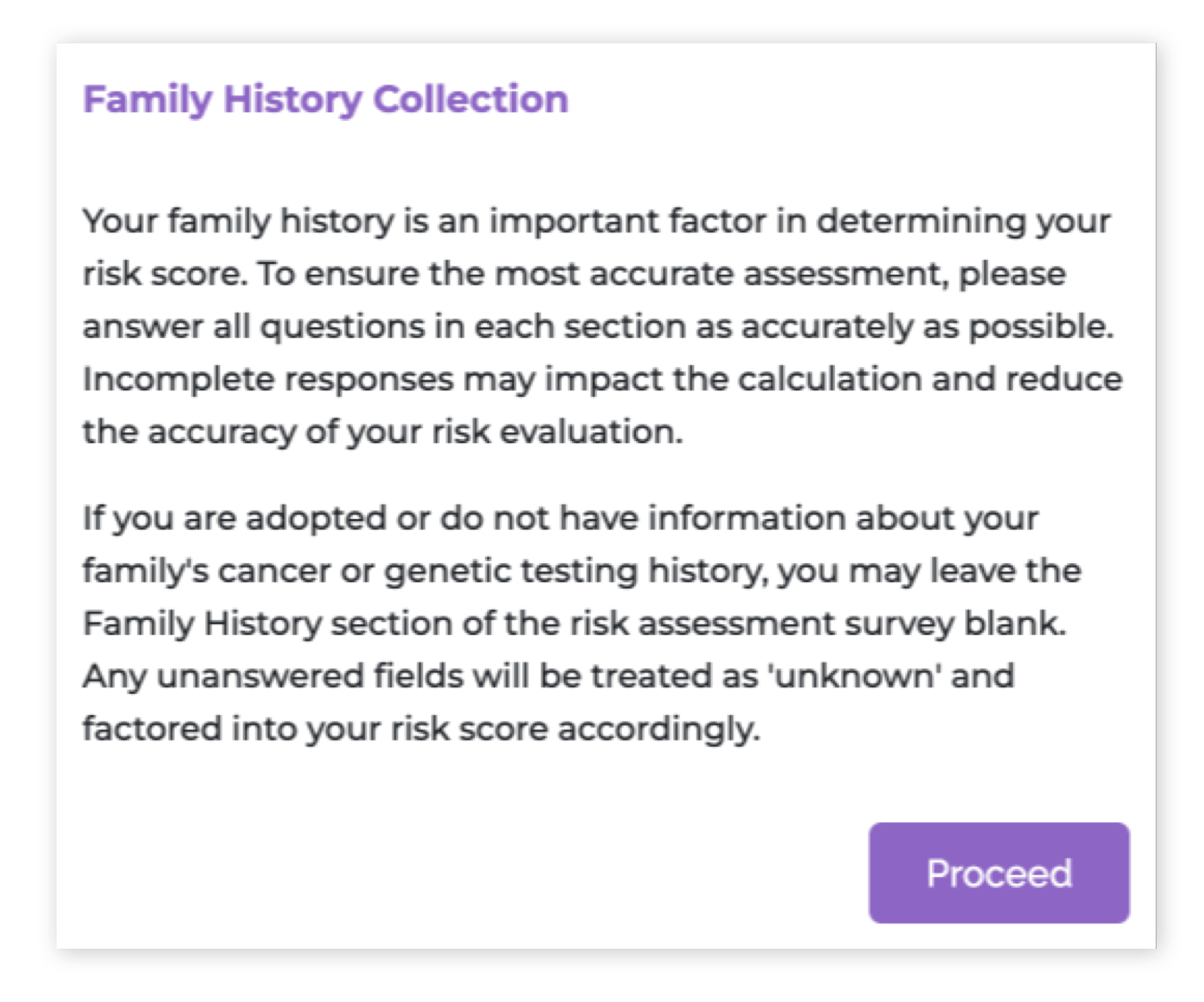
Below is the warning you see before entering the family history section of the Tyrer-Cuzick assessment that Olivia Munn has in the link in her Instagram bio. To get an accurate assessment, you must “answer all questions in each section as accurately as possible.”
But the family history section asks about fourteen categories of blood relatives. For your mother and each of your grandmothers, it wants the age at every diagnosis, and current age or age at death.
If You Don’t Know, Maybe Someone Else in Your Family Does
Of course, you may not know whether your aunt's cancer was breast or ovarian, or what age your grandmother was when hers was found, but someone in your family almost certainly does.
HealthScout lets your whole family build one shared history together. One person starts it, and relatives add what they know. The conditions and the ages at diagnosis can come from the people who were actually there versus people just trying to remember.
HealthScout’s family health history feature covers blood relatives with recorded conditions, the same set of people the assessment asks about. So the result is more medical document than genealogy project. Share or print your Family Health History as a PDF for your doctor, or send it to relatives who don't use the app. Family history is free for you and everyone you add.
Download it before National Family Health History Day this Thanksgiving so you can be ready to record everything your relatives know and share the results at the end.

HealthScout does not calculate your risk. It gives you the answers you need to fill in the form.